Headache and Migraine: Relaxation and Acupressure Techniques
Adapted from A Life Full of Light by Alexis Fotopoulos.
Headaches are not all the same. The location, pattern, triggers and accompanying symptoms matter. Traditional Chinese Medicine uses those differences to choose different meridian pathways, while modern medicine uses them to distinguish among many possible causes.
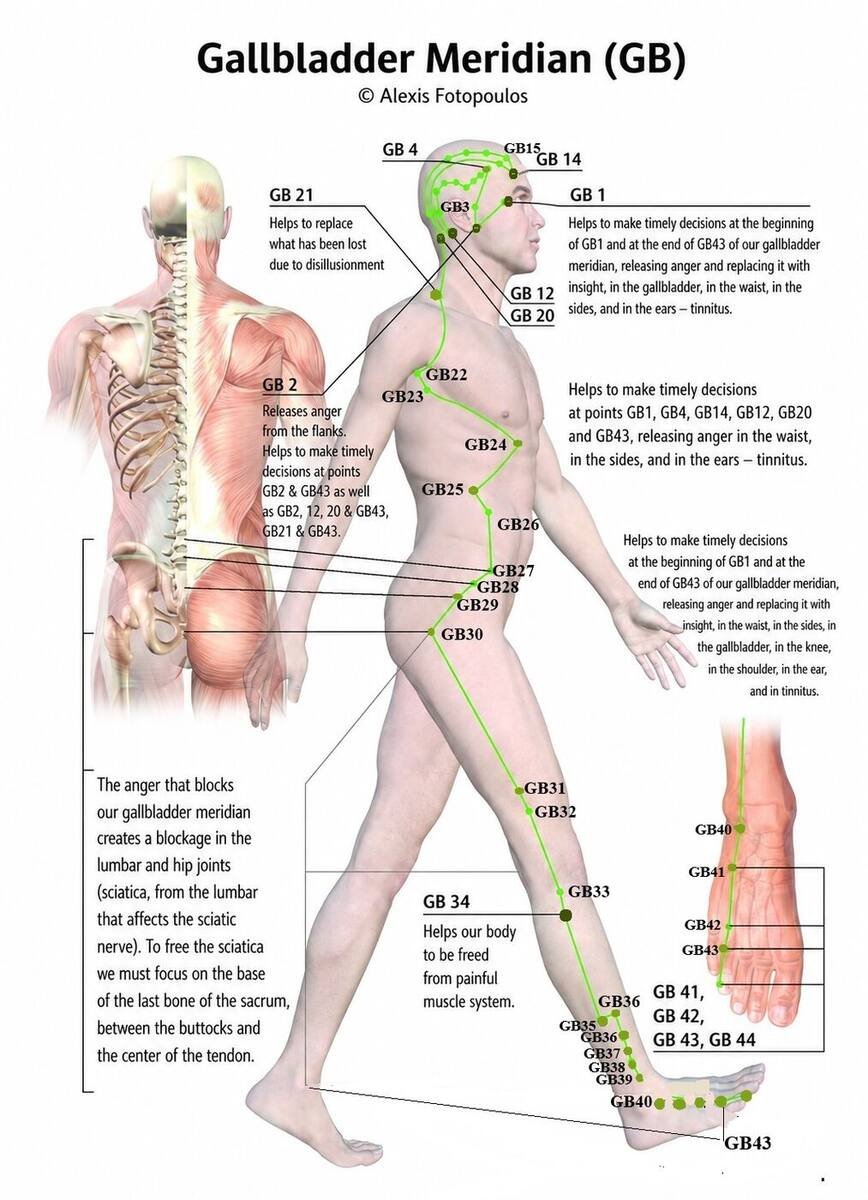
A Traditional Meridian Approach
In my book, headache protocols are organized according to the area of pain and the meridians that traditionally pass through that region.
- Gallbladder: GB21 + GB43, GB12 + GB20, GB1 + GB4.
- Triple Warmer: TW2 + TW17, TW2 + TW20, TW23 + TW19.
- Bladder: BL1 + BL10 or BL2 + BL10.
- Stomach: ST8 + ST36 for frontal-head patterns.
- Heart / Pericardium: used in my approach when stress and emotional agitation are prominent.
How I Use Dual-Point Activation
Two selected points are pressed simultaneously with gentle, comfortable pressure for a few minutes while breathing slowly. Point location should be verified carefully before use.
Relaxation Matters
Muscle tension, poor sleep, dehydration, missed meals, sensory overload and stress can all contribute to headache burden in some people. That is why I combine acupressure with simple measures such as rest, hydration, quiet breathing and reducing stimulation.
When a Headache Needs Urgent Medical Care
Seek urgent medical assessment for a sudden “worst ever” headache, headache after head injury, new neurological symptoms, fever with neck stiffness, confusion, loss of consciousness, new severe headache during pregnancy, or a new headache pattern in someone with cancer or significant immune suppression.
Recurring or changing migraines should also be discussed with a clinician, especially if they are increasing in frequency or interfering with daily life.
A Gentle Self-Care Routine
- Hydrate and sit in a quiet environment.
- Relax the jaw, neck and shoulders.
- Choose one well-located point pair from a familiar protocol.
- Use comfortable pressure for 2–3 minutes.
- Stop if symptoms worsen.
Related Reading
- Acupressure for Stress and Relaxation
- Neck and Lower-Back Discomfort
- How to Locate Acupressure Points Accurately
Alexis Fotopoulos
Complementary self-care alongside appropriate medical care.